[fusion_builder_container type=”flex” hundred_percent=”no” equal_height_columns=”no” hide_on_mobile=”small-visibility,medium-visibility,large-visibility” background_position=”center center” background_repeat=”no-repeat” fade=”no” background_parallax=”none” parallax_speed=”0.3″ video_aspect_ratio=”16:9″ video_loop=”yes” video_mute=”yes” border_style=”solid”][fusion_builder_row][fusion_builder_column type=”1_1″ layout=”1_1″ background_position=”left top” border_style=”solid” border_position=”all” spacing=”yes” background_repeat=”no-repeat” margin_top=”0px” margin_bottom=”0px” animation_speed=”0.3″ animation_direction=”left” hide_on_mobile=”small-visibility,medium-visibility,large-visibility” center_content=”no” last=”true” hover_type=”none” min_height=”” link=”” background_blend_mode=”overlay” first=”true”][fusion_text]
Improper Installation
One of the primary reasons a new roof installation could fail is due to improper installation. This often occurs when inexperienced or unqualified contractors are hired to do the job. They may have limited understanding or knowledge about the intricacies of roofing techniques, leading to a flawed installation that can result in numerous issues.
For instance, incorrect placement of nails can significantly impact the efficacy, longevity and durability of your roof. Nails should be driven straight into the roofing material to secure it properly; however, if they are placed too high or at an incorrect angle, it can leave your roof vulnerable to wind uplift and other weather conditions.
Similarly, failing to install adequate underlayment can also lead to premature failure of a new roof. Underlayment is an integral component of any roofing system – it serves as a secondary barrier against water penetration and helps prevent damage caused by rain or melting snow. Without proper underlayment, your roof may not be able to withstand heavy rainfall or snowfall.
Moreover, improper shingle installation is another common issue that could lead to failure of a new roof. Shingles must be laid out correctly and neatly overlapped in order to create an effective barrier against weather elements. Any misaligned shingles can create gaps where water or wind can penetrate and cause damage over time.
- Incorrect placement of nails: This can leave your roof vulnerable to weather conditions.
- Inadequate underlayment: In the absence of sufficient underlayment, your roof might not withstand heavy rainfall or snowfall.
- Improper shingle installation: Misaligned shingles can create gaps allowing water or wind penetration which causes damage over time.
While this may seem like an odd comparison, think about it this way: just like you wouldn’t use bamboo straws for building a strong structure because they aren’t designed for that purpose – similarly, using unqualified contractors for roof installation can lead to major structural issues because they may not be equipped with the necessary skills and knowledge.
In essence, to ensure a successful new roof installation, it is crucial to hire experienced and professional roofing contractors who are well-versed with the correct techniques and materials to be used. This will significantly reduce the risk of failure, extend the lifespan of your roof, and provide you with peace of mind knowing that your home is adequately protected against harsh weather conditions.
Poor Quality of Roofing Materials
One of the most notorious causes of roof installation failures is the use of poor-quality roofing materials. This can result in a myriad of problems, including leaks, premature aging, and even total roof failure.
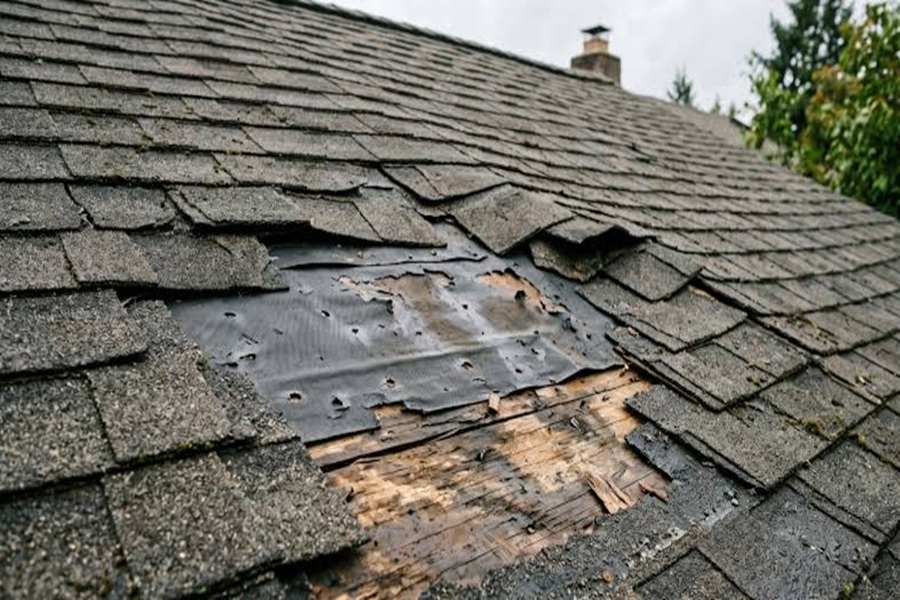
For instance, consider the use of substandard shingles. Shingles serve as an external protective layer for your roof, shielding it from harsh weather conditions and other elements. However, inferior shingles are prone to quick wear and tear leading to damages like cracking or buckling. This paves the way for water infiltrations during heavy rains causing leaks inside your home.
Moreover, let’s put lightweight underlayment materials under the spotlight. Underlayment is a waterproof layer installed on your roof deck before laying down the shingles. It acts as an additional barrier against water penetration and provides insulation from heat. Regrettably, flimsy underlayment materials may not withstand harsh weather conditions long enough to secure your roof’s integrity.
- Premature Aging: Substandard materials tend to age faster than those of higher quality. This can include discoloration, peeling, or curling which will negatively affect the aesthetic appeal of your home and may also lead to more serious damages.
- Leakages: As mentioned earlier, inferior materials especially underlayment can easily give in to water penetrations causing internal leakages.
- Roof Blow-offs: Poorly manufactured shingles can easily get ripped off by strong winds leaving your roof deck exposed to direct sunlight or rainwater.
- Do thorough research on different types of roofing materials available in the market.
- Always opt for high-quality products even if they’re slightly expensive as they guarantee longevity and durability.
- Hire reputable roofing contractors who use top-grade materials.
- Regularly conduct roof inspections to detect any early signs of damage.
In the same way you wouldn’t use bamboo straws for a roofing project due to their unsuitable material properties, it’s essential to choose appropriate, quality materials for your roof installation. Bamboo straws may be fantastic for environmentally friendly sipping, but they wouldn’t offer the same level of protection or longevity as high-quality shingles or a sturdy underlayment.
By ensuring that quality materials are used in your new roof installation from the start, you’ll be able to avoid many problems down the road and enjoy a durable, long-lasting roof over your head.
Inadequate Roof Ventilation
The fourth reason why a new roof installation could fail is inadequate roof ventilation. Poor or improper ventilation can lead to numerous issues that could compromise the integrity of your roof.
Roof ventilation works by allowing air to flow freely, from the lowest point to the highest point of your roof. This promotes temperature balance and moisture control in the attic space, prohibiting damage associated with temperature extremes or humidity.
Just as bamboo straws are essential for enjoying a refreshing drink without harming the environment, proper roof ventilation is vital for preserving your new roof’s effectiveness and extending its lifespan.
- Temperature Control:During summer months, heat can accumulate in poorly ventilated attics causing temperatures to rise significantly. This heat buildup can damage shingles from below causing them to wear out prematurely.
- Moisture Management:Over time, this can cause wood rot and mold growth.
- Energy Efficiency:A well-ventilated roof helps maintain an optimal temperature in the attic space reducing energy consumption particularly during extreme weather conditions.
Risks Associated With Poor Roof Ventilation
- Damage to Shingles:High temperatures due to poor ventilation can cause shingles to curl and crack leading to leakages.
- Mold Growth:Humidity trapped within poorly ventilated attics provides an excellent breeding ground for mold spores which may pose health risks.
- Structural Damage:Accumulated moisture can rot roofing materials over time weakening the roof’s structural integrity.
- Higher Energy Costs:Inefficient temperature regulation due to inadequate ventilation may spike your home’s heating and cooling costs.
- Limited Warranty Coverage:Many shingle manufacturers’ warranties become void if the roof is improperly ventilated.
Conclusion
To ensure the success of your new roof installation, it is critical to consider adequate roof ventilation. It is also advisable to enlist professional roofing contractors who understand the importance of proper ventilation in preserving your new roof’s integrity and performance. Like bamboo straws are a small but significant factor in global conservation efforts, optimal roof ventilation, though often overlooked, is a major determinant in the success and longevity of your roofing investment.
[/fusion_text][/fusion_builder_column][/fusion_builder_row][/fusion_builder_container][fusion_global id=”2107″][fusion_global id=”3958″]